
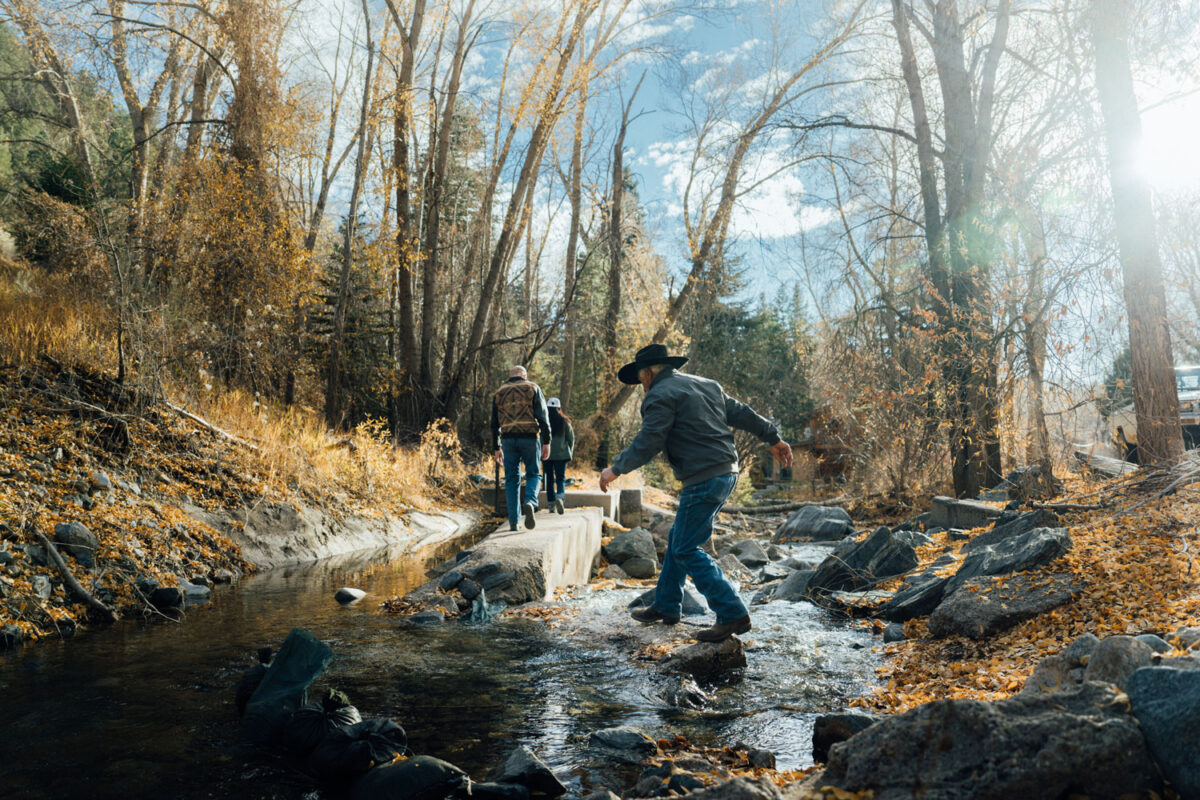
Investing in Farm- and Ranch-Led Drought Solutions
An interview with Sam Fernald of New Mexico State University
Dec / 2025
The image of a multi-million-dollar water treatment facility sitting abandoned and inoperable in the Dominican Republic is still fresh in Sam Fernald’s mind.
A professor of watershed management at New Mexico State University and the director of the state’s Water Resources Research Institute (WRRI), Fernald visited the site in the 1990s while working on an environmental project for the United Nations. The facility was high-tech and modern, the result of decades of academic research and expert engineering. And yet there it stood, its solar panels and other infrastructure scavenged, waiting for local funding and qualified technicians to operate it.
That, Fernald learned, was what happened when well-meaning academics and policymakers instituted solutions from the top down — without considering the interests, needs, resources, or proposed solutions of local communities.
Advancing Solutions with Farmers and Ranchers
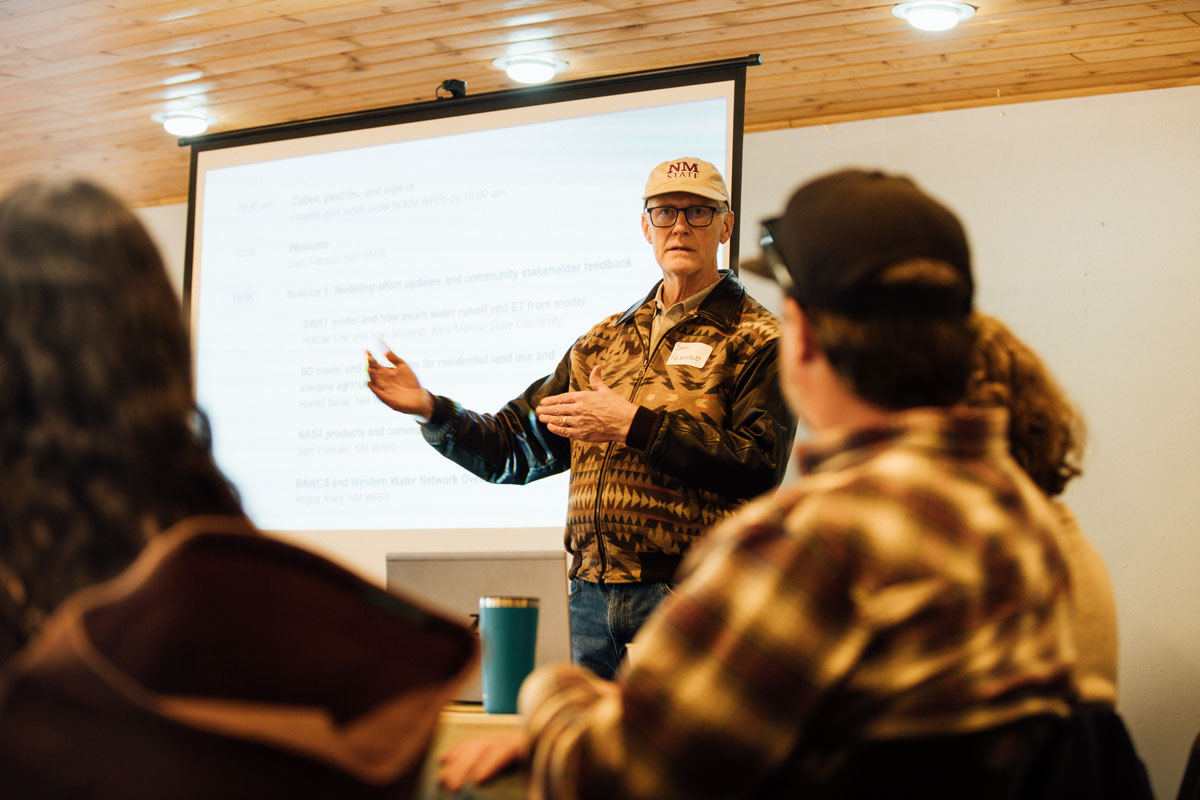
Fernald signed onto the WRRI in 2011. The organization — founded in the 1960s — was the first of its kind, a statewide research group devoted entirely to solving problems related to water supply, drought, and how we can share what we have. A few decades after its founding, New Mexico’s WRRI would become the U.S. government’s model for organizing institutes in all 50 states, Washington, D.C., and three U.S. territories.
Today, much of WRRI’s work in New Mexico is focused on building real solutions that work for real people. Considering the scientific consensus (that New Mexico will see a 25% reduction in available water over the next 50 years) and the fact that agriculture regularly accounts for about three-quarters of the state's water consumption, Fernald and his teams are researching and putting ideas into practice with farmers and ranchers, all aimed at preventing New Mexico’s agriculture industry (and the livelihoods that rely on it) from drying out in the decades ahead.
Profit margins are often slim for farmers, which makes it hard to invest in new technologies, equipment, or crops. But that doesn’t mean the desire to innovate and respond to changing conditions isn’t there. Farmers, he says, just need support to do it. And that’s where the State of New Mexico is coming in.
In early 2025, the New Mexico Legislature authorized the WRRI and the New Mexico Department of Agriculture to distribute $5 million in grants to farmers to study water resiliency in agriculture. Interest in the project among farmers, Fernald says, was massive - and it's already paying off. “There’s a huge pent-up demand for it,” he says. “We had requests for more than double the amount of funding we had available, and that was just in this first year.”
The program, officially titled the Agricultural Water Resiliency Program, has proved to be the antithesis of that empty, expensive water-treatment facility in the Dominican Republic.


The 41 projects funded so far are wide-ranging, but they share a common goal: to make more efficient use of our scant water resources. Some highlights include:
Modernizing irrigation methods: Traditional irrigation relies heavily on gravity. When farmers open their headgates, it can take days for water to make its way across their fields. A series of research projects is investigating more modern irrigation methods. “If you put on some pipes with gates and valves, you can cover your whole field in a few hours,” Fernald says. “It’s more efficient, and the same water goes farther, and you’re not impacting your agricultural capability.”
Another set of projects is investigating drip and sprinkler systems. Instead of flood irrigation, which has its own benefits for recharging aquifers, these systems use less groundwater to get the same amount of crop yield.
Evaporation reduction from livestock watering: In our arid state, evaporation is a huge water consumer in its own right. (More than 7% of the state’s water use can be attributed to evaporation from reservoirs alone.) A series of research projects is investigating how ranchers can reduce evaporation from stock tanks, from which ranch animals and wildlife drink. “It's just constantly evaporating,” Fernald says. “And in some cases, it'll actually dry up, and the livestock and any other wildlife that use it don't have water.” Shade balls, which are small, black plastic balls that cover the surface of the water, reduce evaporation while still allowing animals to stick their heads in and drink.
Other studies investigate the use of renewables, like solar pumps, that more efficiently manage water supplies with targeted pumping and delivery.
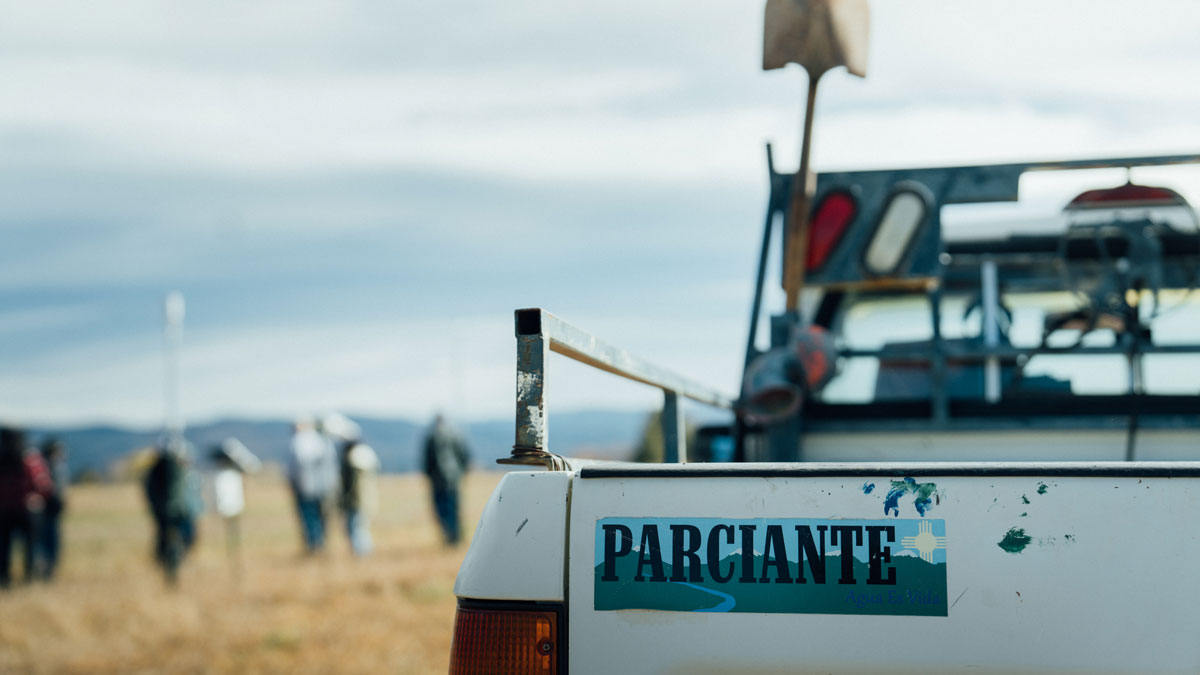
Overall, these projects will give farmers, planners, and researchers hard data about what works — and ultimately, they will inform the state’s regional planners and legislators about which technologies or approaches are most feasible, cost-effective, and save the most water.
Fernald says he hopes legislators will fund the project anew this year. In the meantime, the WRRI has a handful of other research grants in the works as well.
Some investigate water-wise crops like saffron, truffles, pistachios, and Christmas trees as potential alternatives to thirstier mainstays like pecans. Other studies examine ways to retain more water in watersheds and fallow fields without impacting industry.
All of them, Fernald says, involve stakeholders in envisioning a waterwise future in New Mexico.