Can weather data help us dodge disaster?
A conversation with State Climatologist Dr. Dave DuBois
Feb / 2026
In May 2022, as the largest wildfire in state history crested the hill south of Mora, New Mexico, data from the weather station in the middle of town was worth its weight in water.
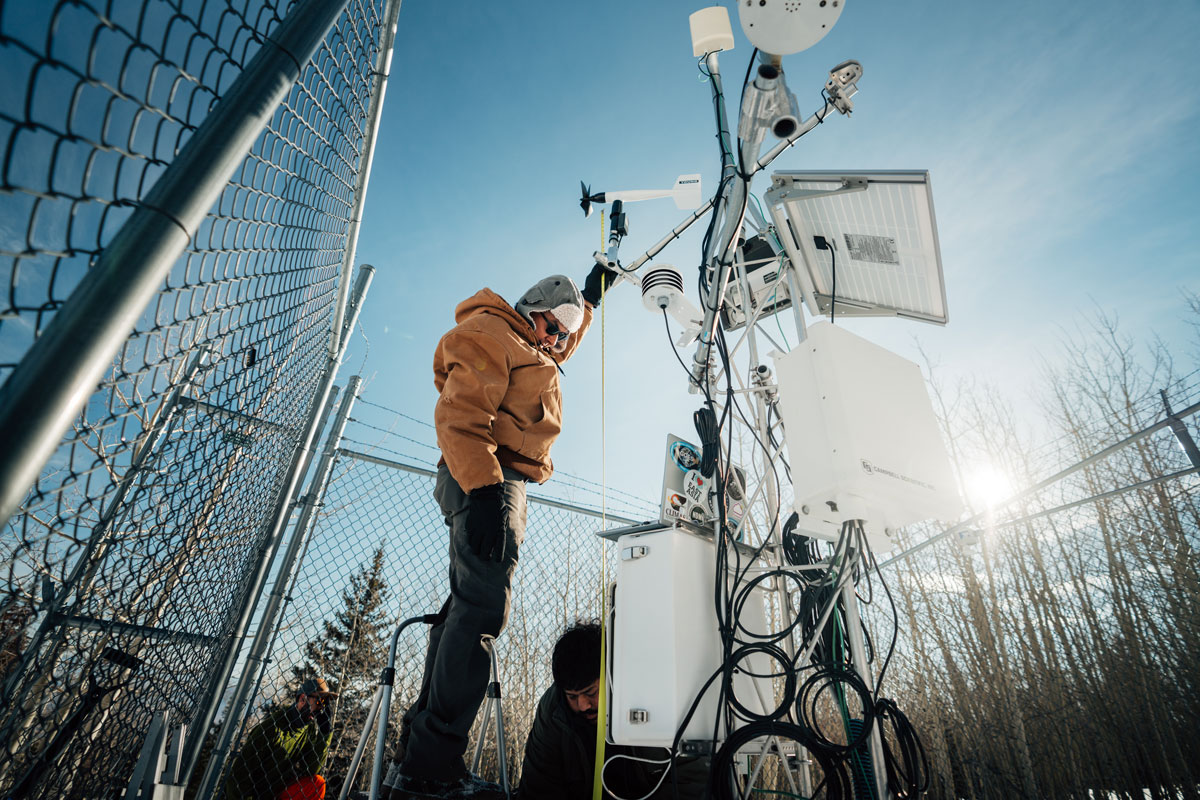
During a wildfire, ground-truth reports about wind speed, relative humidity, temperature, and precipitation help protect cities, structures and lives. Every five minutes — until the Calf Canyon-Hermit’s Peak fire took out the area’s power and Internet connection — the Mora-based station updated fire managers, helping them anticipate the fire’s next move so they could decide where to go and what to do next.
That station is part of a network of 215 weather stations across New Mexico, called ZiaMet, that offers a real-time look at weather when it matters most. Data is used in familiar ways, like updating weather forecasts and reporting conditions. It is also used to issue wind warnings that protect truck drivers traversing the gusty flats of Eastern New Mexico. More expansively, it supports federal organizations monitoring drought conditions and arms farmers and ranchers with the documentation they need to apply for drought relief when times get tough.
As New Mexico’s state climatologist, Dr. Dave DuBois has spent the past five years building ZiaMet from the ground up — and, more broadly, working to fill significant weather-data gaps in the fifth-largest state in the nation.
Shining a light in dark places
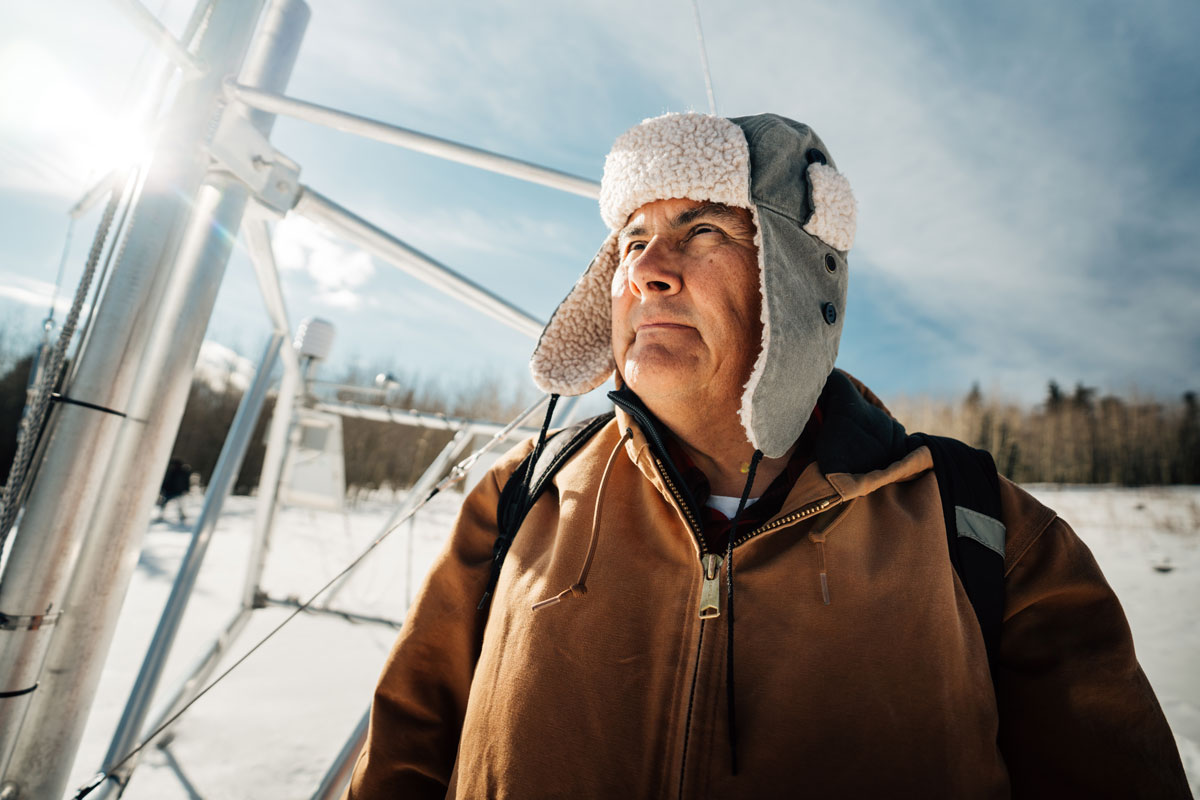
DuBois signed on as state climatologist in 2010 after a career that spanned physics, lasers, and meteorology. His focus on data is setting the state up to weather climate change as it intensifies. (Researchers anticipate New Mexico will see a 25% reduction in surface water and groundwater over the next 50 years.)
DuBois is a scientist at heart, but he’s not afraid to get his hands dirty. Although he has hired technicians, he still services some of ZiaMet’s more than 200 stations when they need maintenance or repair, climbing towers with the expertise, if not the ease, of a certified lineman.
“I’m over 60 now, you know, so I’ve gotta be careful,” he says, smiling.
As part of his data mission, DuBois is pairing his high-tech weather stations with vital citizen-science programs that serve the dual purposes of data collection and public engagement. CoCoRaHS, the Community Collaborative Rain, Hail & Snow Network, is a national program through which anyone with an interest and a bit of inexpensive equipment can help keep track of local precipitation levels.
The network came online in 1998 in Colorado. New Mexico, one of the first states to join up, has up to 600 regular observers. DuBois says he’d love to see that number grow.
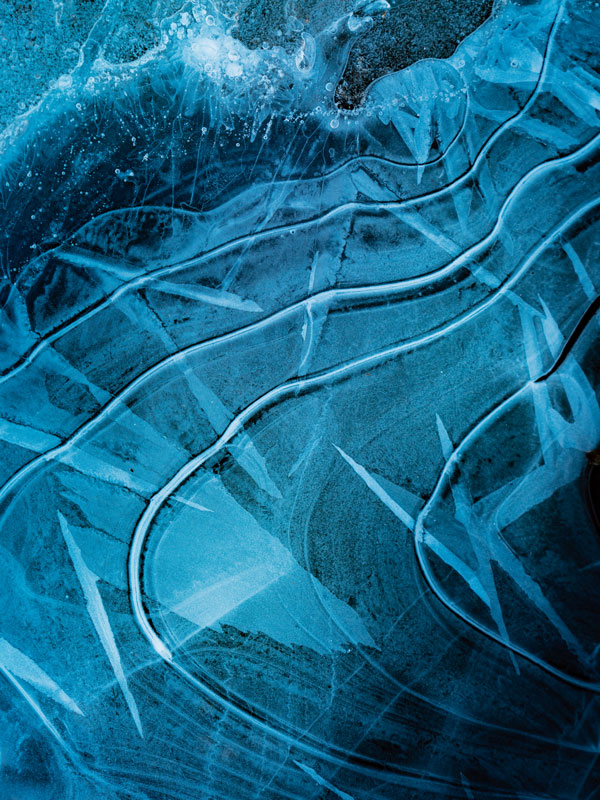
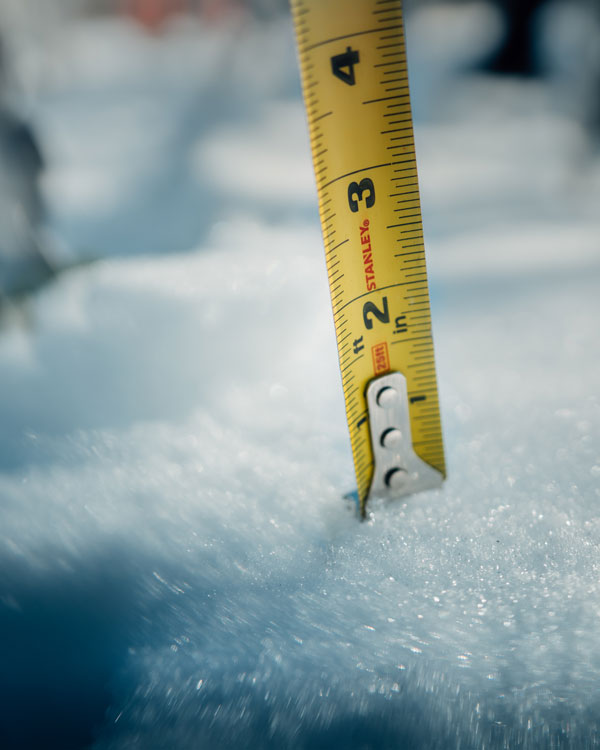
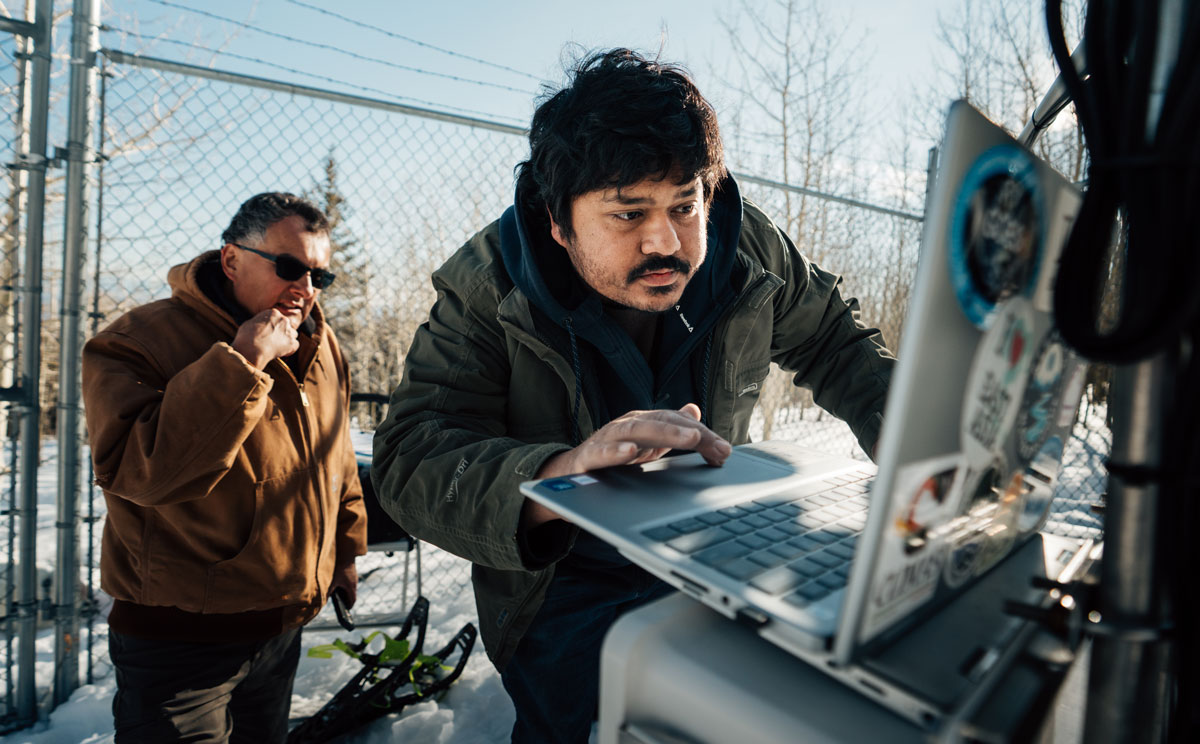
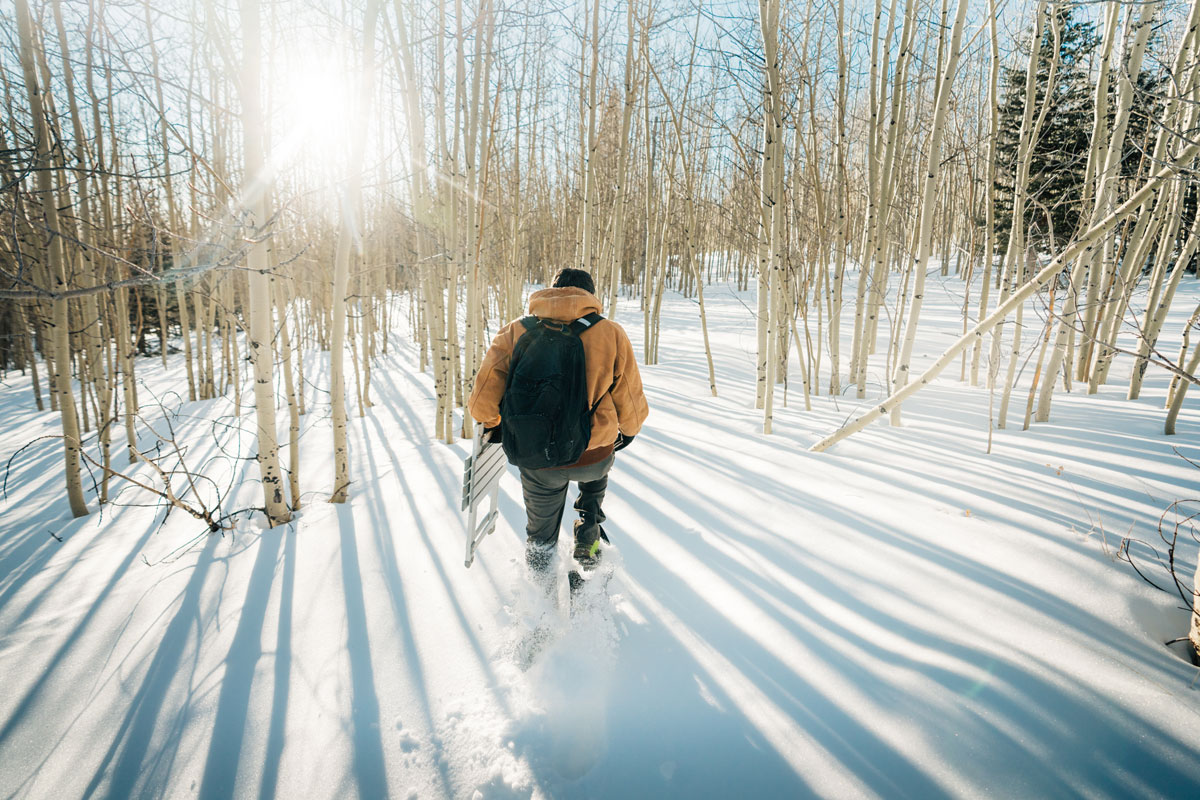
CoCoRaHS observers learn how to measure the water content of snow — a vital piece of data that helps researchers predict soil moisture levels and anticipate how much water will feed mountain springs and replenish aquifers come spring. Some observers’ data shines a light in previously dark locations.
“There are some observers that are really critical, that are not even covered by our radar,” DuBois says.
DuBois also serves as director of the New Mexico Climate Center at New Mexico State University. Along with his team, he’s working to build out a data visualization website that tracks both ZiaMet and CoCoRaHS observations — all with an aim of helping folks plan for the “slow-moving disaster” that is climate change.
“What can we glean from the past? How do we move forward?” he says. “We really have to keep at it.”