
Off the Shelf
Next steps in water planning in New Mexico
Apr / 2026

For decades, regional water plans in New Mexico often ended up as binders on a shelf — carefully written, rarely referenced.
But in a state where water is quickly dwindling, it’s more important than ever to turn abstract plans into action. So now, a small team at the Interstate Stream Commission is reenvisioning the planning process for a drought-resilient future, reshaping it from a one-time task into an ongoing, community-driven system.
This work began with the passage of the Water Security Planning Act in 2023 and continues today. Here’s an update on where we’re at in the process — and what New Mexicans can expect when regional councils begin their work.
‘That flexibility is really important now’
The framework that will guide ISC’s support for regional planning councils is beginning to fall into place. In February 2026, the Interstate Stream Commission adopted the formal rule that will govern the process. One major step remains: the adoption of detailed guidelines that outline how councils will actually be formed and how planning will proceed on the ground.
Those guidelines, which are designed to be flexible enough to adapt to regions’ needs, are already in development and are expected to go through a round of public input before being finalized by the commission.
“They’re really meant to adapt to the process,” says Sara Fox, senior water planner at ISC. “Building in that flexibility is really important now. Climate change is moving quicker than we can keep up with our own laws and goals.”
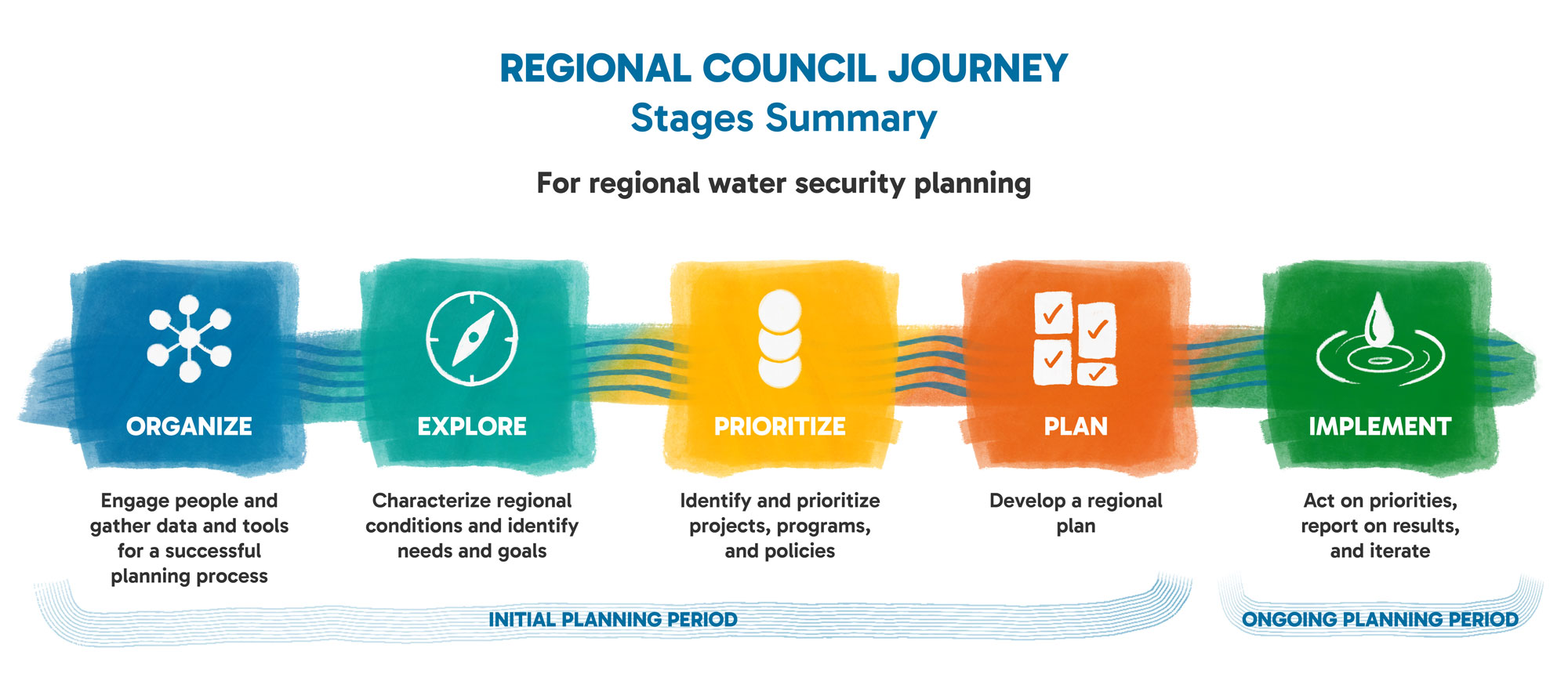
From there, each region will enter what Fox calls the “initial planning period,” a roughly two-year phase focused on forming councils, gathering input, and producing a first regional water plan. NMISC will stagger the nine regions’ start times, supporting three regions at a time over a period of six years. After initial planning, regions will go into an “ongoing planning period” where they’ll put the plan into action, developing, funding, and implementing the projects, programs, and policies each region has prioritized for a sustainable water future.

Top down, bottom up
Regional water planning isn’t new to New Mexico. In fact, the Land of Enchantment was the first Western state to pass such a statute in 1987. But ISC Planning staff say the current iteration is fundamentally different in a few key ways.
Earlier planning efforts either relied heavily on grassroots participation with limited support from the state (a bottom-up approach) or centered on prescriptions from on high (a top-down approach).
The new framework aims to strike a balance by requiring representation from key groups while still allowing flexibility in who fills those roles.
The goal, Fox says, is to “set a bigger table,” ensuring that not just the usual voices are present. The approved rule engages more stakeholders — representatives from each region’s municipalities, conservancy districts, county governments, irrigation districts, Pueblos, Tribes, and Nations, soil & water conservation districts, acequias, active land grants, flood control authorities, and regional water utility authorities — better-positioning projects to move forward.
The state is also shifting to a more active support role. Though this section of the initiative has yet to receive state funding, the WSPA calls for hiring regional water planners to assist and support regional councils throughout the state. These yet-to-be-funded full-time ISC staff members would help coordinate meetings, maintain continuity, and find ways to push projects, programs, and policies forward in each region.

Balancing state and local needs
Even as regional planning takes center stage, it won’t operate in isolation.
State water planning plays a different—but complementary—role. While regional efforts look inward, focusing on local needs and priorities, state planning looks outward, addressing issues that span regional boundaries or involve external obligations.
That includes interstate water compacts, endangered species requirements, and Indian water rights settlements—what the planning team describes as “The Big 3” — all of which shape how much water is available and how it can be used across the state on a larger scale.
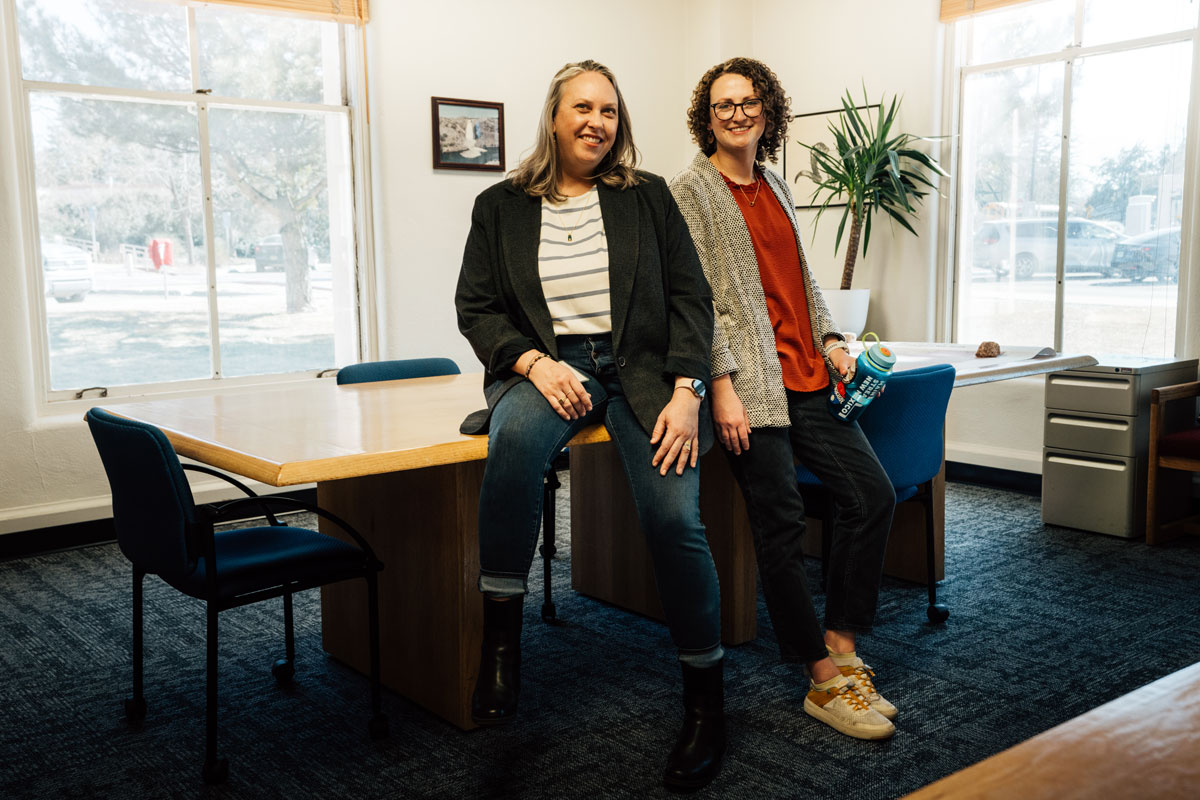
“We’re trying to make sure New Mexico continues to be a great neighbor, and that we keep those relationships positive,” said Anne Ruthstrom, the senior water planner who leads state water planning at ISC. “You know, it's becoming a very, very tight water scene. I think for New Mexicans and our neighbors, we’re all starting to see and feel the impacts of that.”
Historically, regional plans were often rolled up into a single statewide plan that simply summarized what was already published. But that approach didn’t always reflect the large-scale issues or diversity of conditions — geologic, cultural, political — across New Mexico, where water challenges can vary dramatically from one region to another.
The new approach is less about consolidation and more about coordination.
That balance reflects a broader reality: New Mexico’s water future depends both on what happens within its communities and on forces beyond its borders. And it will take all of us coming together to find a balance.
“That’s how the process works, right?” Ruthstrom says. “You don't get meaningful outcomes without being involved. And we are all neighbors. That’s not changing anytime soon. So we should work within the framework we have, and work to improve it if we need to.”