
Saving water, one tree at a time
The connection between New Mexico’s forests and our water supply
Sep / 2026
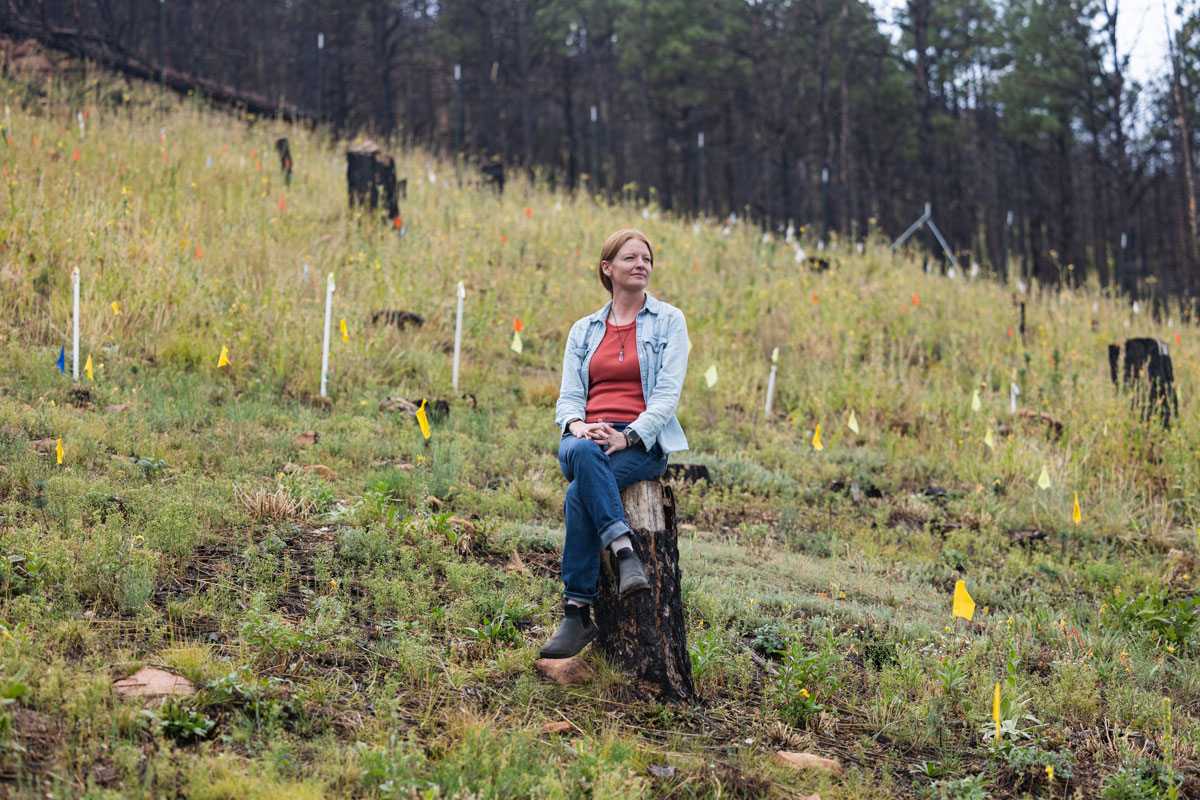
It’s easy enough to imagine trees as guardians — silent sentinels whose branches reach out to shade and protect the forest floor below. But when it comes to water in New Mexico, the metaphor rings true.
“In the Southwest, our water security is directly tied to forests,” says Jenn Auchter, director of the New Mexico Reforestation Center (NMRC). “If you don’t have trees, the snow melts, and that water evaporates back into the atmosphere and leaves the system. Trees are like natural water infrastructure.”
So what happens to our water system when raging wildfires rage through millions of acres of forests over the course of a quarter-century?
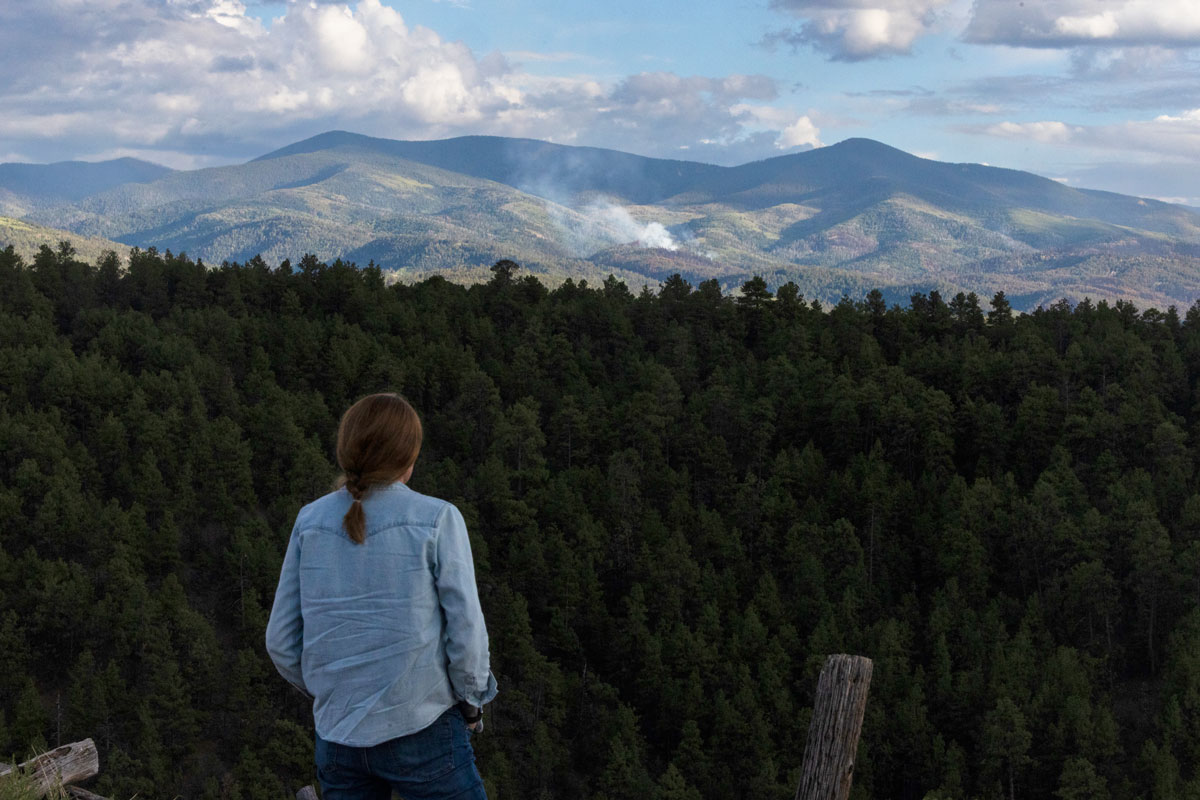
That’s exactly the challenge scientists in New Mexico are facing now. Since 2000, more than 6.8 million acres — or nearly one-quarter of the forested land in the state — have burned, some with no hope of recovering on their own.
In 2022, three universities and a state agency came together to build a first-of-its-kind solution. If all goes as planned, by 2030, NMRC will be growing and planting up to 5 million native trees per year in an effort to restore vital forests that help capture and keep water in our high-desert state.
Protecting downstream communities
Healthy forests protect watersheds in more ways than one.
Not only do they keep snowpack from evaporating, but their roots stabilize soil, preventing erosion during large precipitation events and safeguarding downstream communities from fast-moving floods. Healthy soil lets water seep in — and seep out — slowly, which keeps streams flowing long after snow melts in early spring.
Between 75% and 80% of all water in the Southwest passes through forests. So when wildfires destroy those forests, the impacts can be felt far and wide.
The largest wildfire in New Mexico’s history, the 2022 Hermit’s Peak/Calf Canyon blaze, destroyed large sections of the headwaters of several watersheds, devastating the water supplies of nearby communities.
The fire not only destroyed vital water infrastructure, making it difficult for utilities to deliver water to their customers, but it also caused long-term negative impacts to water quality. The Pecos River ran gray with ash from the burn scar, and the City of Las Vegas, New Mexico, had to pivot away from using the Gallinas River as their main water source because the blaze had altered the river’s chemistry. Ongoing studies are trying to assess whether the fire caused dangerous PFAS, or “forever chemicals,” to be found in local wells.
Auchter estimates officials will need 17-18 million trees to reforest the watersheds damaged by the Hermit’s Peak/Calf Canyon fire. NMRC, she says, has committed 30% of its seedlings each year to the effort.
A collaborative approach
Prior to the center’s formal creation, New Mexico State University, the University of New Mexico, Highlands University and the New Mexico Energy, Minerals, and Natural Resources Department’s Forestry Division were already collaborating to grow and plant seedlings at a smaller scale.
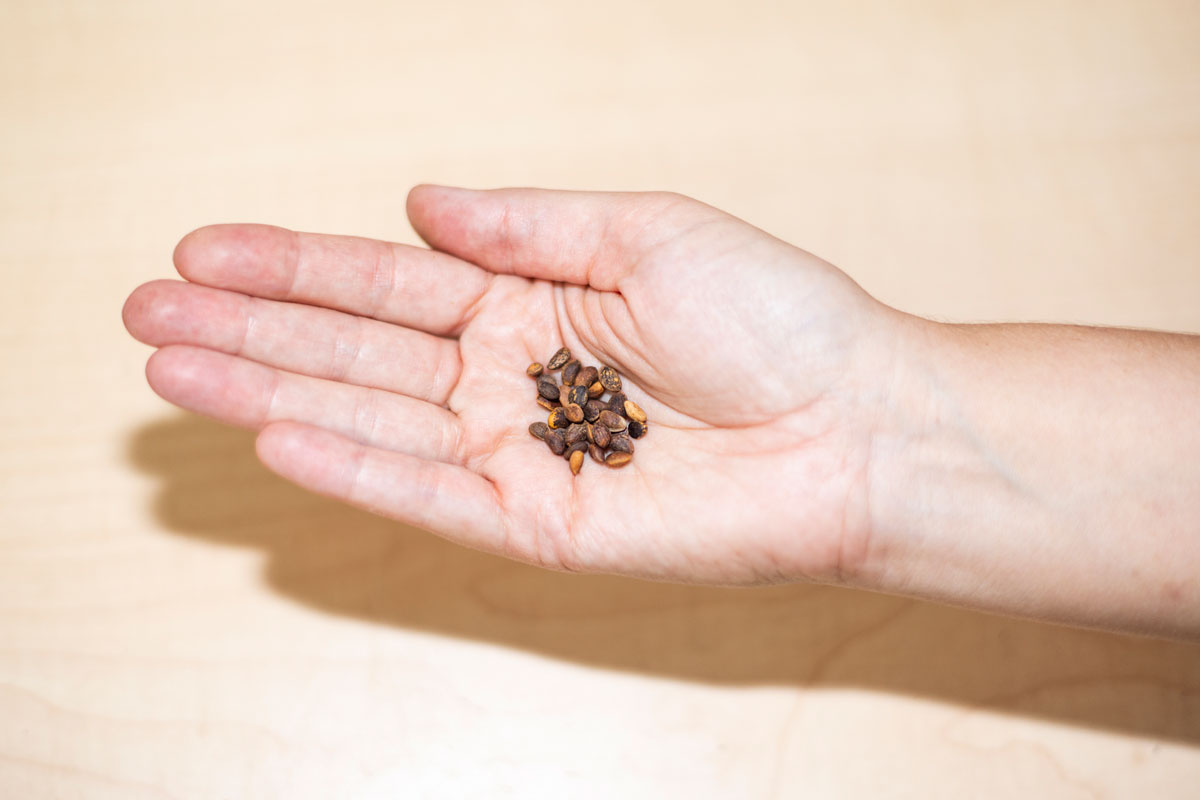
Highlands’ staffers collected cones from New Mexico trees, extracted the seeds, and stored them at their seed bank in Las Vegas. NMSU researchers grew seedlings at the John T. Harrington Forestry Research Center in Mora and studied how to boost baby trees’ survival rates in the wild. Staffers at EMNRD prepared burned sites and coordinated planting crews, and UNM faculty developed landscape models to help match seeds to appropriate planting locations.
‘A surviving tree’
Various state and federal agencies engage in reforestation work in New Mexico. But most of the time, those seedlings have to be trucked into the Southwest from northern states like Oregon and Idaho. It’s a long journey that can stress trees beyond repair. That, combined with the fact that trees from outside the state are less likely to thrive in New Mexico’s arid climate, means outsourced trees’ survival rates are low — typically about 20%, Auchter says.
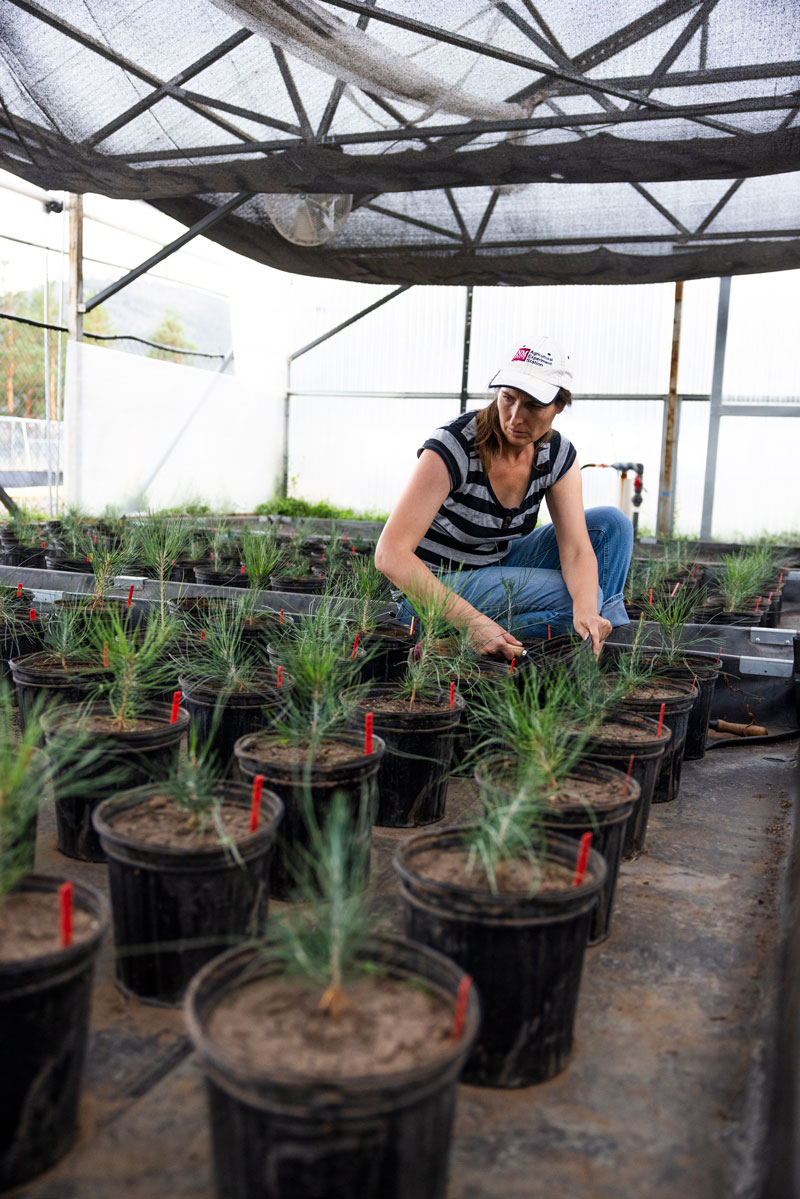
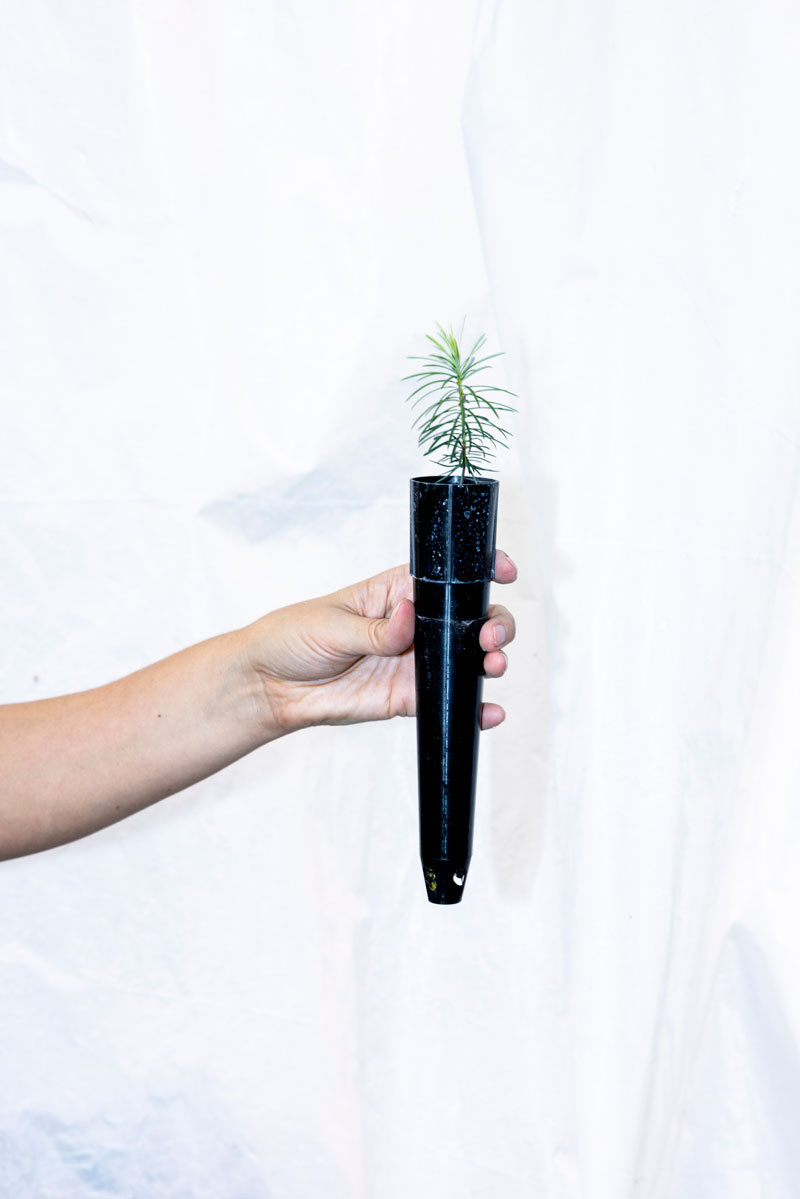
NMRC’s vertically integrated system means native trees are grown locally, drought-stressed from their earliest days of life, and moved only a short distance to their forever home. In early testing, these trees are showing survival rates of up to 70%.
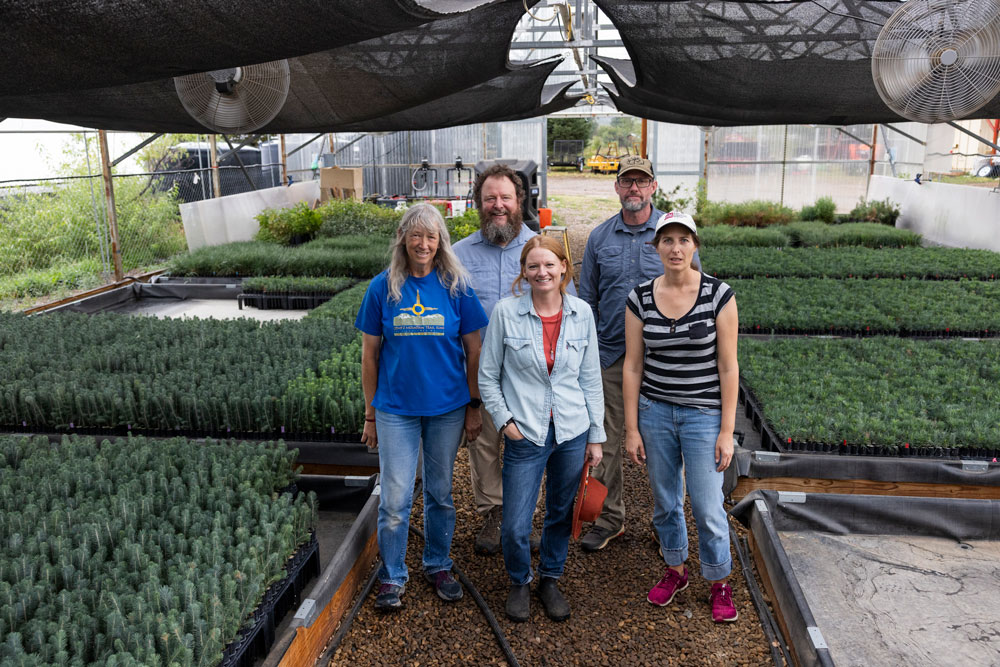
“What we’re really growing is a surviving tree,” Auchter says. “It’s not just a seedling. It’s all of the research and coordination and everything else that goes into it.”
Ultimately, NMRC is hoping to build a cohort of local partners and contractors, including arborists and landscaping companies, to plant trees throughout the state. It will be a vast undertaking: According to the nonprofit Reforestation Hub, which maps reforestation opportunities across the country, it will take 305 million trees to restore health to New Mexico’s watersheds.
Without those manually planted trees, forests — and the critical water infrastructure they provide — may not recover.